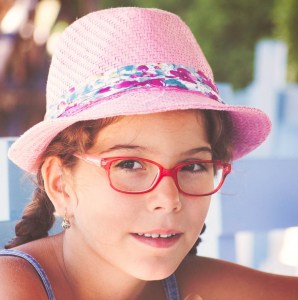
Myopia Management in Plainview, NY

If your child's prescription is getting worse every year, that's not something to wait out. Myopia (nearsightedness) progresses fastest during the growing years, and the earlier you act, the more you can slow it down. At Spectacular Eyewear, our optometrist Dr. Karen Perekalsky works with families across Nassau County to manage myopia in children before it becomes a long-term problem.


Why Myopia in Children Needs Attention Now

A child who is -1.00 at age 8 doesn't stay there. Without management, that prescription often climbs to -4.00 or -5.00 by the time they finish high school. Higher myopia isn't just thicker glasses. It increases the lifetime risk of retinal detachment, glaucoma, cataracts, and macular degeneration. The goal of myopia management is to slow that progression during the years when it moves fastest.

1 in 3 Children in the U.S. are now myopic
50% Of the world's population projected myopic by 2050
6-14 Peak age range for myopia progression

What Causes Myopia to Get Worse

Child with glasses reading on a tablet in Nassau County

Myopia happens when the eyeball grows too long from front to back. Light focuses in front of the retina instead of on it, which makes distant objects blurry. Two main factors drive progression:

Genetics. A child with one myopic parent has roughly double the risk. Two myopic parents and the risk triples. If you or your partner wears glasses for distance, your child's eyes should be monitored annually starting at age 5 or 6.

Screen time and near work. Hours spent on tablets, phones, homework, and reading at close range signal the eye to grow longer. Research consistently shows that children who spend more time outdoors and less time on close-up activities have slower myopia progression. The problem is that most kids today are doing the opposite.


Signs Your Child May Need Myopia Management

Most parents don't realize myopia is progressing until the next eye exam shows another jump in prescription. But there are signs to watch for between visits:

!

Squinting at the TV, whiteboard, or across the room

!

Sitting closer to screens than they used to

!

Complaints of blurry vision or headaches after school

!

Tilting their head or covering one eye to see

!

A prescription that has changed at every annual exam

!

Difficulty seeing the ball during sports or outdoor play

If any of these sound familiar, book a myopia evaluation. The earlier we start, the more room we have to slow things down.


How We Manage Myopia

There is no single approach that works for every child. Dr. Perekalsky evaluates your child's prescription history, age, lifestyle, and rate of change before recommending a plan. Here are the main options we use:

Myopia Control Contact Lenses

Specially designed soft contact lenses that correct distance vision while using peripheral defocus to signal the eye to slow its growth. These are daily disposables, so there's no cleaning or overnight wear. Many kids age 8 and up adapt to them quickly.

Orthokeratology (Ortho-K)

Rigid gas permeable lenses worn overnight that gently reshape the cornea while your child sleeps. They remove the lenses in the morning and see clearly all day without glasses or contacts. Ortho-K has strong research behind it for slowing axial elongation.

Low-Dose Atropine Drops

Prescription eye drops used at bedtime that have been shown in clinical studies to slow myopia progression. Often used in combination with corrective lenses. Dr. Perekalsky determines the right concentration based on your child's response.

Myopia Control Spectacle Lenses

Newer lens designs like DIMS and HAL technology that look like regular glasses but use special optical zones to slow eye growth. A good option for younger children who aren't ready for contacts or for kids who prefer glasses.

Most myopia management programs involve follow-up visits every 4 to 6 months to track axial length and prescription changes. The goal is measurable slowing of progression, not just correction.


What Parents Should Know

Pediatric eye exam at Spectacular Eyewear in Plainview NY

Myopia management is not a cure. It won't reverse your child's prescription. What it does is slow the rate of change during the years when progression is fastest, typically between ages 6 and 14. That means your child may end up at -3.00 instead of -6.00 by the time they stop growing. That difference matters for their eye health for the rest of their life.

The process starts with a full evaluation. Dr. Perekalsky reviews your child's prescription history, measures their current axial length, and talks with you about what's realistic. If your child is a good candidate, she'll recommend a specific approach and schedule follow-ups to track progress.

Want the full breakdown of options, costs, and what to expect? Read our detailed guide on myopia management for kids in Nassau County.


Related Eye Care Services

Myopia management is one part of your child's overall eye health. We also provide:

Pediatric eye exams to establish a baseline and catch issues like lazy eye, eye turns, and astigmatism early. Kids eyeglasses built for durability and proper fit. Contact lens fittings for older kids in sports. And full family eye exams so you can get everyone checked on the same visit.

If your child's prescription includes hyperopia or astigmatism alongside myopia, Dr. Perekalsky factors that into the treatment plan.


Visit Us in Plainview

We see families from Plainview, Syosset, Woodbury, Hicksville, Bethpage, Jericho, and Old Bethpage. Most of our myopia management patients are referred by parents in the Plainview-Old Bethpage and Syosset school districts whose kids are dealing with worsening prescriptions year after year.

Dr. Perekalsky sees patients Tuesday through Saturday. Book an evaluation so we can review your child's history and determine if myopia management is the right step.

Spectacular Eyewear

436 Woodbury Road
Plainview, NY 11803

516-822-8971

Mon: 10am-6pm
Tue: 9am-6pm
Wed: 10am-7pm
Thu: 10am-6pm
Fri: 9:30am-5:30pm
Sat: 9:30am-4pm

Book Appointment

Myopia Management FAQ

At what age should my child start myopia management?

+

Most children start between ages 6 and 12, when myopia tends to progress fastest. The earlier we begin, the more we can slow the change. If your child's prescription has increased at two or more consecutive exams, that's a strong signal to schedule an evaluation.

Is myopia management safe for children?

+

Yes. The treatments we use, including specialty contact lenses, ortho-K, and low-dose atropine drops, have been studied in clinical trials involving thousands of children. Dr. Perekalsky monitors your child closely with follow-up visits every 4 to 6 months to track progress and adjust the plan as needed.

Can my child wear regular glasses instead?

+

Regular glasses correct blurry vision but do nothing to slow how fast the eye is growing. Myopia management uses specific lens designs or treatments that actively work to reduce the rate of axial elongation. Standard glasses are still an option for daily wear, but they won't address the progression itself.

How much does myopia management cost?

+

Cost varies depending on the treatment approach. Some medical insurance plans cover the exam and monitoring visits. Specialty lenses and atropine drops may have separate costs. We walk you through everything before you commit, so there are no surprises. Call 516-822-8971 and we can check your coverage.

How do I know if it's working?

+

We track two things: prescription changes and axial length. Axial length is the actual measurement of how long the eye is growing. At each follow-up visit, we compare these numbers against your child's baseline. A slower rate of change compared to their previous pattern tells us the treatment is working.