

Astigmatism Diagnosis and Correction
Astigmatism blurs vision at every distance because the front of the eye, or the lens inside it, is curved more in one direction than the other. Dr. Karen Perekalsky, OD, FAAO, measures exactly how much and at what angle, and our opticians build glasses or fit contact lenses that correct it at that same angle.
What astigmatism is
A clear eye focuses light to a single point on the retina. For that to happen, the cornea at the front of the eye needs an even curve, round like a basketball. With astigmatism, the curve is steeper in one direction than the other, closer to a football. Light passing through it comes to focus at two different points instead of one, so nothing lands perfectly sharp, near or far.
Most astigmatism comes from the cornea. Some comes from the lens inside the eye, and some people have a little of both. It is very common, and many people have a small amount without ever noticing it. It often runs in families, it is frequently present from childhood, and it can shift slowly over the years. An injury or scar on the cornea can also change its shape.
Astigmatism rarely travels alone. Most people who have it are also nearsighted or farsighted, which is why one prescription usually corrects both. If distance blur has been getting worse in a child, our page on myopia management explains how that is tracked. If close work tires your eyes, farsightedness may be part of the picture.
Eye doctors also separate regular from irregular astigmatism. Regular astigmatism has its steepest and flattest curves at right angles to each other, and glasses or soft lenses correct it well. Irregular astigmatism, from a thinning cornea such as keratoconus or from scarring, has an uneven surface that glasses cannot fully correct. That is where rigid lenses come in.
How Dr. Perekalsky measures astigmatism
Astigmatism is found and measured during a full eye exam. Nothing about it is invasive, and these are the parts of the visit that pin down the numbers.
How to read astigmatism on your prescription
The cylinder and axis columns are where astigmatism lives. Here is what each part of a glasses prescription means, using sample values.
Sample values only. A glasses prescription and a contact lens prescription are written differently, and a contact lens prescription comes from a separate fitting.
Ways to correct astigmatism
Which option fits depends on how much astigmatism you have, whether it is regular or irregular, and how you spend your day. Dr. Perekalsky goes over the choices with you at your exam.
Glasses made to your axis
For most people, glasses are the simplest correction. The cylinder power is ground into the lens at a set angle, and that angle has to match your axis when the lens sits in the frame. A lens turned even a few degrees off can leave the blur behind, and the error matters more as the cylinder gets higher.
Our opticians mark, align and edge your lenses in our own lab at the shop, so the axis on the lens matches the axis on your prescription before it is mounted. Single vision, bifocal and progressive lenses can all carry astigmatism correction.
About custom lensesToric soft contact lenses
A toric lens is a soft contact lens with astigmatism correction built in. Like a glasses lens, it has to stay at the right angle, so it is designed to settle and hold its position on the eye rather than spin with each blink.
About contact lens fittingRigid gas permeable lenses
Rigid gas permeable (RGP) lenses hold their own shape. On the eye, a thin layer of tears fills the space between the lens and an uneven cornea, so the lens gives the eye a smooth new front surface. That makes RGP lenses a common choice for irregular astigmatism, including keratoconus and corneal scarring, and for high astigmatism that soft lenses do not fully correct.
Dr. Perekalsky completed a fellowship in cornea disease and contact lens management, and specialty and RGP fittings are part of her regular work.
See specialty contact lensesAsking about refractive surgery
Some adults ask whether laser vision correction or other surgery can correct their astigmatism. That decision belongs to a refractive surgeon, who examines your eyes and tells you whether you are a candidate. We do not perform surgery.
What we can do is give you a current, accurate measure of your prescription and the health of your corneas, so you go into that conversation knowing your numbers. Many people keep glasses or contacts and never need anything else.
Contact lenses when you have astigmatism
People with astigmatism were once told contacts were not for them. Today many of them can wear contacts. The difference comes down to the fitting, because a lens for astigmatism has to correct the right amount of cylinder and sit at the right angle at the same time.
What a fitting adds to the exam
A contact lens prescription is not the same as a glasses prescription. The lens sits right on the eye, so Dr. Perekalsky measures the cornea, chooses a trial lens and then watches how it behaves on your eye. With a toric lens she checks where it settles and whether it stays put when you blink and look around. If it lands off angle, she adjusts the lens choice or the prescription to account for it.
When the cornea is irregular
An irregular cornea takes more care to fit. RGP lenses are often fit with more than one trial and a follow-up visit, and there is a period of getting used to the feel of a firmer lens. That is normal, and we walk you through it.
Learning to handle your lenses
If you are new to contacts, optician Gail DeClue specializes in insertion and removal training, so you leave knowing how to put the lenses in, take them out and care for them at home.
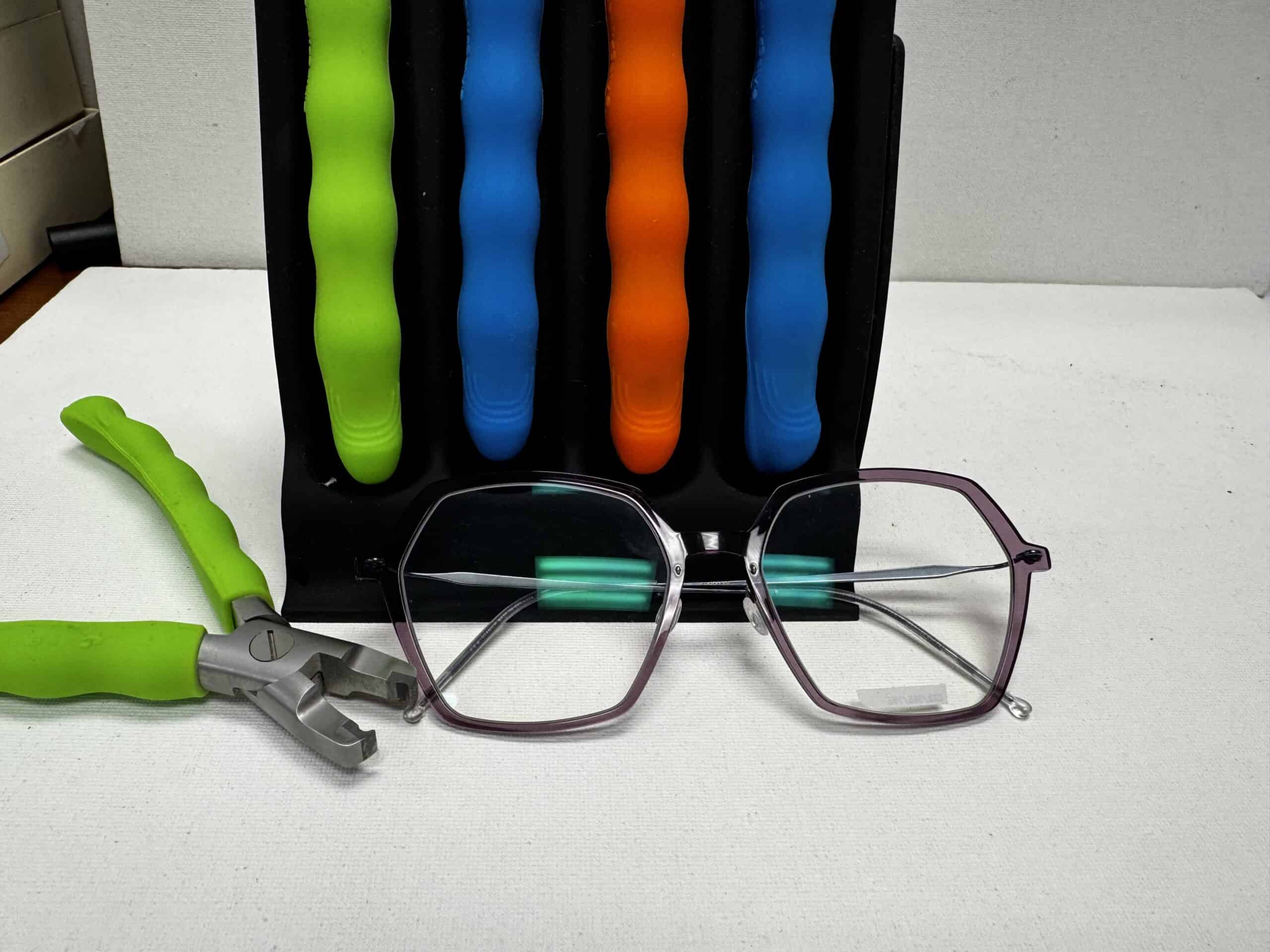
Why frame fit matters more with astigmatism
An astigmatism lens works only when its axis lines up with your eye. The lab can edge the lens exactly to your axis, but if the frame sits crooked on your face, the lens tilts with it, and so does the axis. A frame that slides down your nose or rides higher on one side moves the lens away from the spot it was measured for.
That is why our opticians adjust every finished pair on your face before you take it home. They level the frame, set the nose pads and shape the temples so the lenses sit where they were measured. If your glasses get bent or start to slip, bring them in and we will set them straight again.
Frame choice matters too. A frame that fits your face well holds its position through the day, which keeps the axis where it belongs. Our page on eyeglass fitting covers how we match frames to the face.
Astigmatism questions
It can change slowly over the years, and some people see the amount or the axis shift between exams. A sudden change is less common and is worth an exam soon, since a change in the shape of the cornea can be a sign of a condition such as keratoconus.
A new astigmatism correction can make floors look tilted or straight lines look curved at first, especially if the cylinder or axis changed. If it has not settled, or the frame feels crooked, come back so we can check the lenses and the fit.
Yes. Every full eye exam with Dr. Perekalsky measures astigmatism along with nearsightedness and farsightedness, and the results appear in the CYL and AXIS columns of your prescription. Exams at our Plainview shop run Tuesday through Saturday.
Astigmatism is measured during your eye exam, so it falls under how your plan covers the exam. We are in network with EyeMed, and VSP, Davis Vision and Spectera are accepted out of network. Call us to check your plan before you book.
Find out what your astigmatism numbers mean
Book an eye exam with Dr. Perekalsky online, or call and we will find a time Tuesday through Saturday. Bring your current glasses and contacts so she can compare them with what she measures.