

Pediatric Eye Exams for Kids and Teens
A pediatric eye exam with Dr. Karen Perekalsky checks how clearly your child sees and how healthy their eyes are, from the first visit before school through the teen years. Kids rarely say they cannot see well. Most assume everyone sees the world the way they do, so the exam is often the first time anyone finds out.
A school vision screening is not an eye exam
Passing the screening at school is good news, but it only answers one narrow question: can your child read a chart across the room today? Many vision problems that affect reading and learning, like trouble focusing up close or eyes that do not work well together, slip right past a screening. Eye health is not looked at at all.
A pediatric eye exam covers all of it. It is the same kind of careful visit adults get in our full eye exams, adapted for a child's age, attention span and comfort.
A screening is a quick check. If it flags a problem, or if you notice any of the signs below, book a full exam.
Signs your child may need an eye exam
These are the signs parents and teachers notice most often, grouped by age.
Before school starts
Young children cannot tell you the board is blurry, so watch how they look at things instead. An eye that turns in or out, even now and then, is worth a visit. So is a child who covers or closes one eye to look at something, tilts their head to see, or bumps into things more than other kids their age.
At this age the exam focuses on eye alignment, basic sharpness of vision and early signs of lazy eye (amblyopia). Finding these before kindergarten gives your child the best footing for learning to read.
When schoolwork gets harder
This is when vision problems often show up, because reading and classwork demand more from the eyes. Watch for:
Exams at this age check near and distance clarity, how the two eyes work together and how well they focus. Squinting can point to nearsightedness, or to astigmatism, which blurs vision at every distance.
Screens, sports and changing prescriptions
Teens spend long hours on homework and phones, so eye strain and headaches are common complaints. Prescriptions can change quickly during the growing years, and a teen who seemed fine last year may be squinting at the board this year.
The exam watches for prescription changes and digital eye strain, and looks at what your teen needs for sports. This is also when many teens first ask about contact lenses.
Signs that should not wait for a routine visit
A sudden eye turn, a very red and painful eye, or a child who suddenly cannot stand light also deserves a prompt call. We will tell you whether to come in or where to go.
What happens during your child's exam
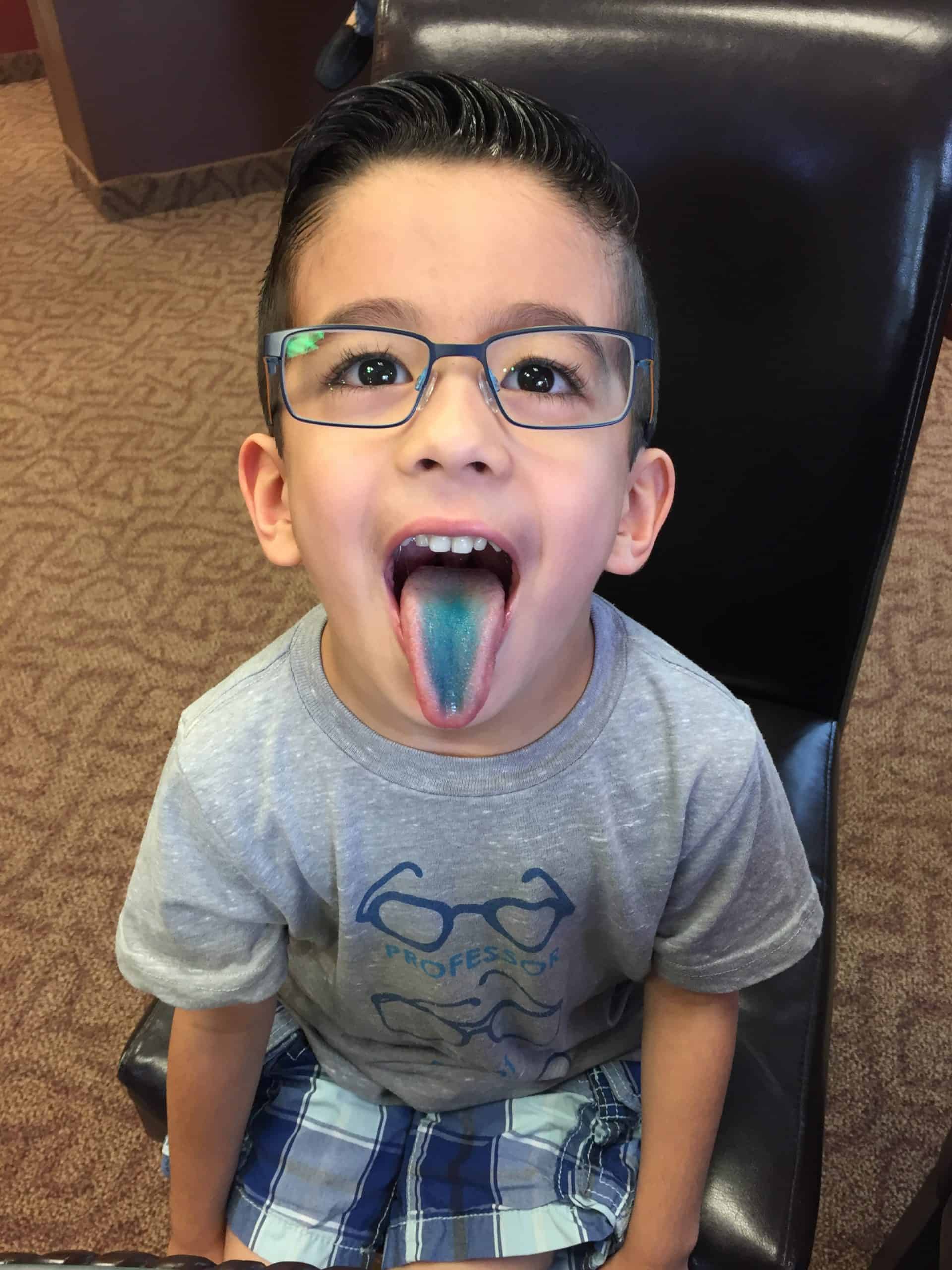
The visit is gentle and paced for your child's age, and you can ask questions at every step.
How to prepare your child, and what to bring
A relaxed child gives clearer answers, so a little preparation goes a long way. Tell your child they will look at pictures and lights and play some looking games. There are no shots. If drops are used, they may sting for a moment and make bright light feel strong for a while afterward, so sunglasses help on the ride home.
Book a time when your child is usually rested and fed, not right before a nap. Dr. Perekalsky sees patients Tuesday through Saturday, including Wednesday evenings until 7:00 PM and Saturday mornings, so you can often avoid pulling your child out of school.
Bring these to the visit:
When nearsightedness keeps getting worse
Nearsightedness (myopia) means far away things look blurry while close things stay clear. It often starts in grade school and tends to climb while a child is still growing. A family history of nearsightedness raises the odds.
Each pediatric eye exam gives Dr. Perekalsky a new data point. If your child's prescription keeps going up from one exam to the next, that is the time to talk about myopia management. Dr. Perekalsky will walk you through the options that fit your child's age, prescription and habits. Management does not cure nearsightedness or reverse a prescription. The goal is to slow the change during the years it moves fastest.
Not every child who needs glasses is nearsighted. Some kids are farsighted, with hyperopia making close work like reading tiring, and some have astigmatism along with it. Dr. Perekalsky takes all of it into account.
After the exam: glasses, sports eyewear and contacts
You can go straight from the exam room to the frame displays in the same visit. The exam, the frames, the lenses and the fitting all happen in one shop.
Using your plan for your child's exam
If your child is covered on your vision plan, bring that card to the visit. We are in network with EyeMed. VSP, Davis Vision and Spectera are accepted out of network. Tap your plan to see how we handle it, or call and we will check before you book.
In network
Out of network
Something else
Pediatric eye exam questions
Plan on a pediatric eye exam before your child starts school, and sooner if you notice an eye turn, squinting or any of the other signs on this page. After that, Dr. Perekalsky will recommend how often to come back based on what she finds and how your child's eyes are changing.
Yes. A screening mostly checks distance vision on a chart. It does not check focusing, how the eyes work together or eye health, so a child can pass and still struggle with reading. A pediatric eye exam looks at all of those.
Sometimes. Dilating drops give Dr. Perekalsky a clearer view inside the eye and a more accurate prescription. The effect is temporary, and light may feel bright and close-up vision may blur for a while, so bring sunglasses.
Yes. Younger children look at pictures and shapes instead of letters, and much of the exam relies on what Dr. Perekalsky observes rather than what your child says.
You can choose frames right after the exam at our shop at 436 Woodbury Road in Plainview. Our licensed opticians fit kids frames for comfort and durability.
Book your child's eye exam
Dr. Perekalsky sees patients Tuesday through Saturday, with Wednesday evening and Saturday morning appointments. Book online or call, and tell us your child's age so we can plan the visit around them.